
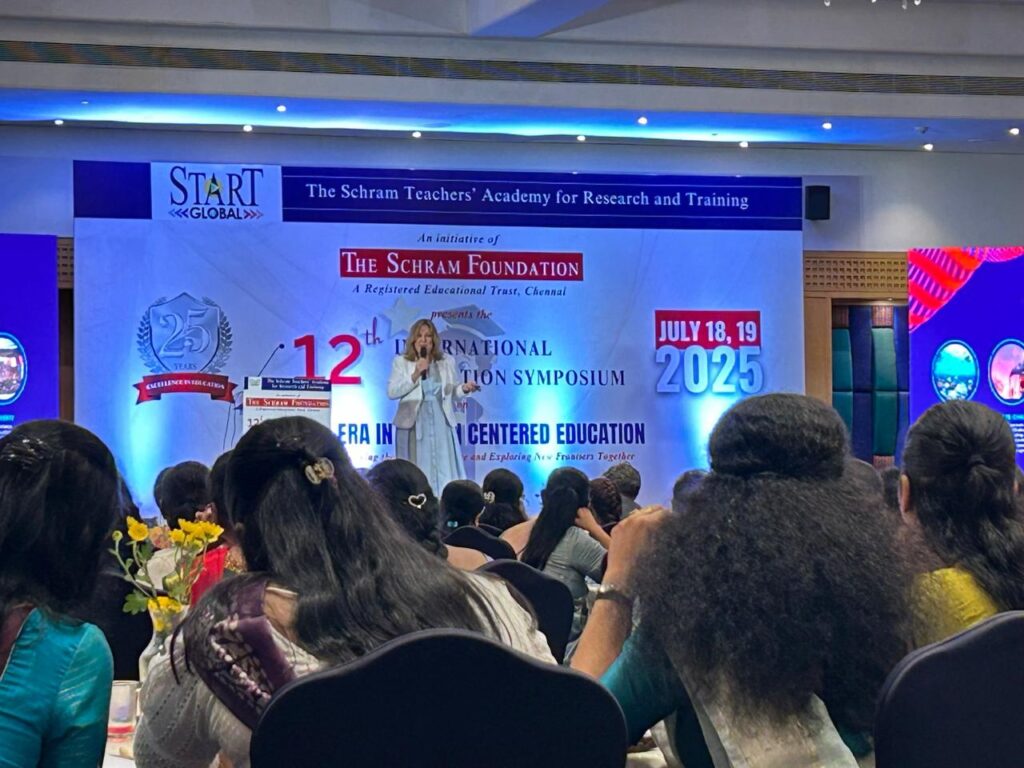
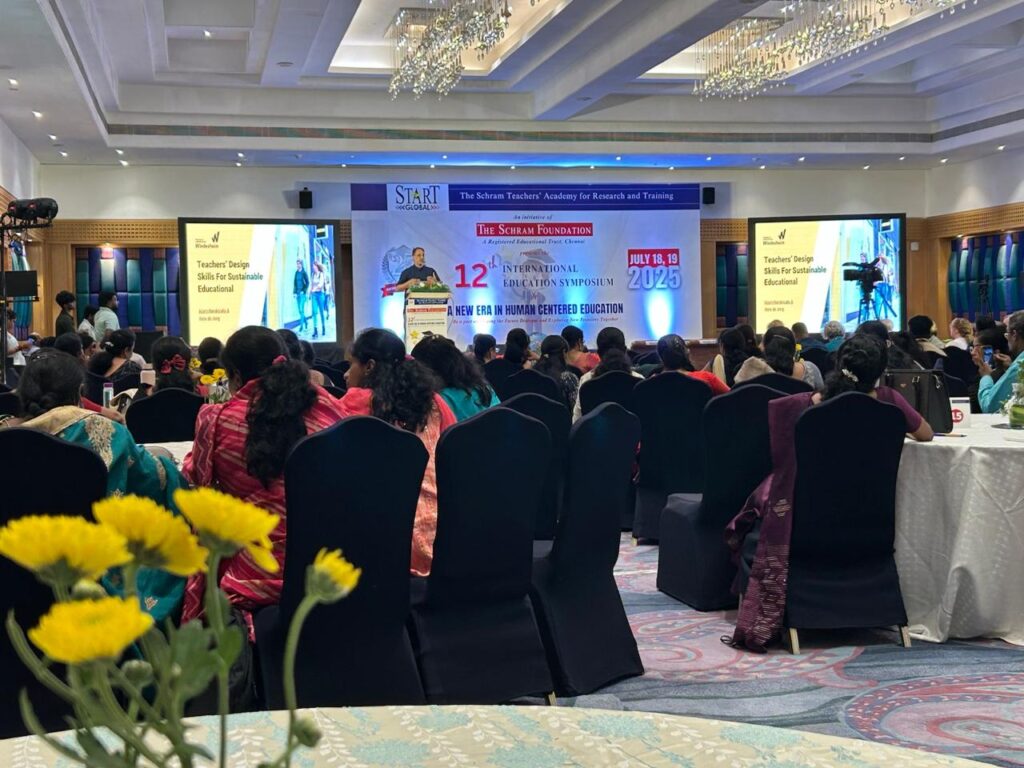
What does Success look like in Today ‘s Education Environment? The question came up at the 12th International Educational Symposium in Chennai, where global educators, researchers, and policymakers gathered to rethink learning. The answers were surprising but not shocking: not grades, not test scores, but courage, curiosity, empathy, and character. The aspects you can’t always measure, but the ones that make everything else possible.
That question lingered as I reflected on my journey as an educationist with the Centre for Intrinsic Motivation (CIM), supporting government school teachers across India. I’ve seen students and their worth reduced to marks, and teachers navigating systems that rarely ask how they’re doing.
Teachers are tired not just physically, but emotionally holding too many expectations, performance metrics, children’s emotions, and their own silence.
If we understand success as something more than just plain marks,, we must first ask: Are we creating the right conditions for teachers to experience and model it themselves?
Walking Alongside Teachers: Empathy as a Measure
The symposium’s call to strengthen the non-measurable aspects of education felt like a mirror to our work at CIM. If we say we value traits like courage, curiosity, empathy, and character in students, we must extend the same values toward teachers.
When we reimagine success, we must be more intentional not just in what we offer teachers, but how we offer it. As a facilitator at CIM, I’ve learned that real change happens in co-created spaces, where teachers pause, reflect, and reconnect with their purpose.
CIM doesn’t offer one-off training or scripted solutions. It creates the conditions for teachers to feel safe, supported, and seen through peer learning circles, emotional check-ins, and storytelling tools. These spaces invite meaning-making, not just method-sharing.
Most importantly, CIM thereby redefines success for teachers not with test scores, but with the ability to feel whole: to feel safe, seen, and supported. Sometimes, success is a teacher rediscovering their “why,” asking a thoughtful question, or taking one small risk to try something new.
Intelligence Beyond the Test: Courage and Character in the Classroom
A specific session at the symposium“Decoding the Spectrum of Intelligence”emphasized how much our definition of success hinges on our understanding of intelligence. One key takeaway stayed with me: intelligence isn’t just IQ. It is emotional, social, and relational.
It shows up in a variety of ways – how teachers handle conflict, how they hold space for children’s emotional worlds, how they lead with quiet conviction.
I was reminded of Meena ma’am, a government school teacher in rural Tamil Nadu. She’s always silent in our workshops. Her English is hesitant. But in her classroom, her leadership is unmistakable. She creates clear routines, cultivates curiosity, and holds her students with deep care.
That’s intelligence too,the kind we rarely name.
The Work Ahead: Redefining the Scorecard
Supporting teachers in these dimensions emotional resilience, reflective practice, relational leadership is an essential infrastructure for the future of education. Because the future doesn’t only depend on what children learn. It depends on who they learn it from and whether those individuals are equipped, supported, and empowered to model the very values we claim to prize.
Courage. Empathy. Curiosity. Character. These are not “nice to have skills”. They’re the new success metrics. And if we want to nurture them in learners, we must invest in the teachers who make learning possible.
That, I believe, is the real work ahead.